Update on the Expansion of the Slow Down, Move Over (SDMO) Law
 The Association of Ontario Road Supervisors is pleased to share an important update regarding the recent passage of Bill 229, the Working for Workers Six Act, 2024, which includes an expansion to the Slow Down, Move Over (SDMO) law. This legislation is a significant step forward in enhancing the safety of roadside workers across Ontario.
The expanded SDMO law now extends protections to a broader range of roadside workers, reinforcing the importance of slowing down and moving over when approaching stopped vehicles performing vital duties. This initiative underscores the government’s commitment to improving safety for those who work on or near Ontario’s roadways.
While we celebrate this progress, AORS has also taken proactive steps to ensure the safety of municipal public works employees. In a submission to the Ministry of Transportation, we expressed concerns about the current provision that specifies protections apply only when “flashing amber lights” are activated. Many municipalities, particularly during winter maintenance, rely on blue flashing lights on vehicles such as snow plows. These blue lights are a critical identifier of active maintenance operations, and their exclusion could create gaps in worker protection.
AORS has formally requested that the Ministry consider expanding the legislation to include vehicles equipped with blue flashing lights, ensuring comprehensive coverage for all municipal public works activities. For example, a snow plow operator pulled over to the side of the road to clear ice from the conveyor should receive the same level of protection as other roadside workers.
We are optimistic that the Ministry will take our recommendations into account in future amendments or clarifications of the law. AORS remains committed to advocating for the safety and recognition of municipal public works employees and will continue to keep our members informed of any further developments.
We encourage all members to familiarize themselves with the updated SDMO law and to continue emphasizing safety in all municipal operations. Your vigilance and advocacy play a vital role in protecting our workforce and the communities we serve.
For more information or to share your feedback, please contact Kelly Elliott, Marketing and Communications Specialist, at kellyelliott@aors.on.ca.
Ontario Proposes Legislation to Hold Municipal Elected Officals Accountable for Code of Conduct Violations
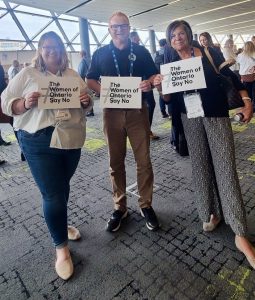 The Ontario government has introduced a new bill aimed at increasing accountability among municipally elected officials. Under this proposed legislation, municipal elected officials who engage in serious violations of their council’s code of conduct—such as workplace harassment, discrimination, or other unethical behavior—could face removal from office.
Currently, municipalities in Ontario lack the authority to impose significant consequences on municipal elected officials who breach their codes of conduct. At most, penalties are limited to reprimands or docking of pay, even in cases of severe misconduct. This legislative gap has left many victims of workplace harassment and abuse feeling unprotected, with municipalities often unable to take decisive action against perpetrators.
The new bill, announced by Minister of Municipal Affairs and Housing Paul Calandra, seeks to change that. By introducing the possibility of dismissal for serious breaches, the province aims to create safer, more respectful work environments for municipal staff and elected officials alike.
Building on Advocacy Efforts
This proposal aligns with long-standing advocacy efforts by groups like The Women of Ontario Say No, the Association of Municipalities of Ontario (AMO), and the Association of Municipal Managers, Clerks, and Treasurers of Ontario (AMCTO). These organizations have repeatedly called for stronger measures to address harassment and toxic workplace behavior in municipal government.
The Association of Ontario Road Supervisors (AORS) has also championed the need for stricter enforcement. In a letter to the Minister of Municipal Affairs and Housing, AORS supported introducing greater accountability measures, including the removal of elected officials from office in cases of serious misconduct.
Earlier initiatives, including Bill 5 by Liberal MPP Stephen Blais, sought similar accountability measures but failed to pass. Bill 207, currently tabled by NDP MPP Jeff Burch, also addresses this issue and has garnered significant support from over 100 municipalities and key industry associations. The Progressive Conservative introduction of this new bill signals a growing recognition of the need for legislative reform.
Concerns About Enforcement
While the bill is being applauded as a step in the right direction, some concerns have been raised about its enforcement mechanism. The current proposal leaves the decision to remove an elected official from office to the local council, following a recommendation from the municipality’s integrity commissioner. Critics argue that this approach could lead to inconsistencies across municipalities, as decisions may be influenced by local political dynamics.
Emily McIntosh, from the Women of Ontario Say No, says “If you require unanimous support at the council level, it means that one person who has a personal relationship with another person can undermine the recommendation of the provincial integrity commissioner for removal.” She continues to say on the Women of Ontario Say No’s social media in a video, “it also is extremely inefficient from a taxpayer perspective, which means we’re investing as taxpayers into this great process to make things consistent, only to see it potentially risk being non-actionable because one person doesn’t like the outcome.”
In a news announcement AMCTO ultimately agrees with Emily McIntosh as they stated “… there may be duplication in the need for inquiries, with Integrity Commissioners continuing to serve largely in an advisory capacity, leaving the ultimate decision-making with local councils. Other than recommending removal in the most serious of cases, which must meet four specified criteria, penalties and/or sanctions remain limited. Moreover, the process maintains a lack of independent oversight and may in fact, lead to inconsistency in accountability across municipalities.”
What the Bill Proposes
The proposed legislation outlines a clear process for addressing violations:
- Investigations: Municipal integrity commissioners will continue to investigate complaints against elected officials accused of misconduct.
- Recommendations: If a serious breach is confirmed, the municipal integrity commissioner could recommend removal from office as a penalty. In this case, the decision must also be made by the provincial integrity commissioner.
- Local Council Decision: The local council would have the final authority to enforce the removal through a unanimous decision, raising concerns about impartiality and fairness.
A Step Toward Cultural Change
Despite these concerns, the bill marks a significant shift in how Ontario addresses misconduct among municipally elected officials. Supporters emphasize that municipal employees deserve workplaces free of harassment and toxic behavior, and this legislation is an important first step toward creating such environments.
“Municipal employees deserve to feel safe and respected in their workplaces,” AORS President Joe Reid, CRS-S, stated. “Legislation is desperately needed to ensure that bad actors are held accountable and send a strong message that harassment and misconduct have no place in public office.”
As Ontario continues to refine its approach, there is hope that future iterations of the bill will address these enforcement gaps, ensuring both accountability and consistency across the province.
That said, it is important to note that the provincial government has now rose for its winter break – which this government has extended. The legislature was set to return on February 18th, but it now won’t be back until March 3rd. The bill is skipping second reading, so it is possible that the committee hearings could take place while the legislature is not sitting. Stephen Blais, Liberal MPP for Orleans who originally brought Bill 5 forward, has shared concerns that he is concerned the bill will never pass with the possibility of Premier Doug Ford calling an early election this spring.
AORS will continue to keep our members updated as the work on this proposed legislation progresses.
If you have any advocacy efforts you would like to see AORS take a role in, please contact Kelly Elliott, Marketing and Communications Specialist, at kellyelliott@aors.on.ca.
Happy Holidays
The AORS Executive Committee, Board of Directors and Staff wish you and your families a safe and happy holiday season, and a Happy New Year.
President Joe Reid, CRS-S brings holiday greetings to both our AORS Municipal Members, and our Supplier Members.
Please note, the AORS office will be closed for the holidays on Monday December 23, 2024 and will re-open on Thursday January 2, 2025.
2025 Volunteer of the Year Award
 This award was established by the Association of Ontario Road Supervisors that will be awarded to someone who has made ongoing contributions to the association. This award is meant to recognize the invaluable and outstanding contribution to the municipal sector made by our dedicated volunteers who have made a significant contribution to AORS.
Selection of the award recipient will be made by the Association’s executive based on the criteria listed below.
The nominee must:
• Be a current and active volunteer;
• Be a municipal or supplier member/volunteer (AORS employees and paid instructors are ineligible);
• Have served a minimum of five (5) years as an active volunteer;
• Be an active and dedicated supporter of AORS; and its public works professionals dedicated to providing high-quality public services through certification, educational programs and interaction amongst its members and the strategic goals of the association.
The nomination period will end on February 7, 2025, and the recipient of this annual award will be announced at the Annual General Meeting on March 31, 2025 at the Good Roads Conference. The nomination form can be printed off and sent to the Executive Director (Mr. John Maheu) at admin@aors.on.ca or can be filled out below.
Previous Award Recipients
2023 – Larry Maddeaux, CRS-I
2024 – Paul Kay
Investing In Safer Rural Roads
The statistics are staggering and paint a clear picture of the urgent need for investment in our rural communities. In 2023 alone, 616 lives were lost, and 36,090 people were injured on Ontario’s roads—a nearly 20% increase in fatalities over the last decade. In 2021, 561 road fatalities were recorded, with 426 occurring on municipal roads. Alarmingly, while rural Ontario accounts for only 17% of the province’s population, it suffers 55% of these fatalities, underscoring the disproportionately high danger of rural roadways.
For AORS, road safety is not just a professional concern but a core part of our mission to promote excellence in municipal public works. Our members are on the front lines of road maintenance and construction, tasked with ensuring that roads are safe and accessible for all users. Each tragedy on our roads is a stark reminder of the responsibility our members carry and the importance of equipping them with the tools, resources, and programs needed to mitigate risks and save lives.
This crisis has far-reaching implications for rural municipalities. In addition to the devastating human toll, the financial burden of roadway collisions has compounded challenges for municipalities already grappling with rising insurance premiums and an unsustainable joint and several liability framework. These costs further strain municipalities’ ability to maintain and improve their road networks, leaving them with few options to mitigate risks.